
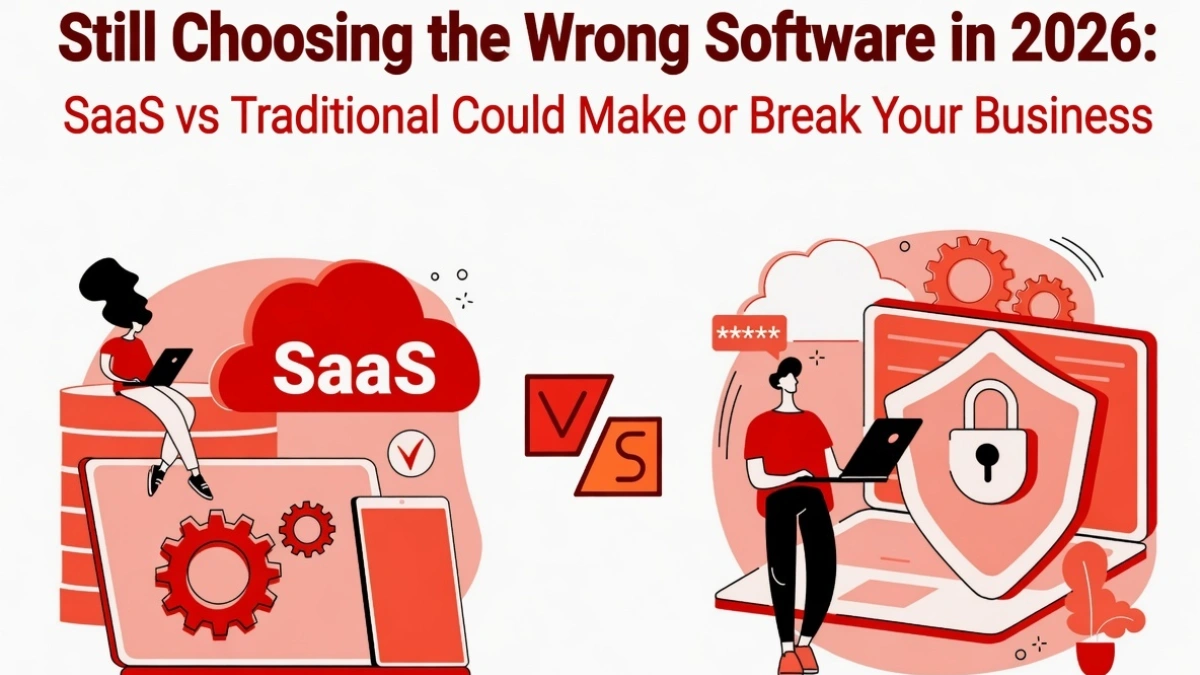
In 2026, the debate between SaaS and traditional software is more relevant than ever. Businesses are rapidly shifting to cloud-based tools, yet many are still holding onto outdated systems. Choosing the wrong model can lead to higher costs, inefficiency, and limited growth. Understanding the difference between SaaS and traditional software is essential if you want to stay competitive and make smarter technology decisions.
What Is SaaS Software
SaaS, or Software as a Service, is cloud-based software that you access through the internet. Instead of installing it on your computer, you use it via a browser or app. Popular tools like Slack, Shopify, and Google Workspace follow this model. SaaS operates on a subscription basis, where you pay monthly or yearly. The provider handles updates, maintenance, and security.
What Is Traditional Software
Traditional software is installed directly on your computer or company servers. You usually pay a one-time license fee to purchase it. This model gives businesses full control over the software and data. However, it also requires IT infrastructure, manual updates, and ongoing maintenance. Traditional software was the standard before cloud computing became popular.
Key Differences Between SaaS and Traditional Software
The main difference lies in how the software is delivered and managed. SaaS is accessed online, while traditional software is installed locally. SaaS uses a subscription model, whereas traditional software often requires a one-time payment. SaaS is easier to scale and update, while traditional software offers more control but requires more effort to maintain.
SaaS vs Traditional Software Comparison Table
| Feature | SaaS Software | Traditional Software |
|---|---|---|
| Deployment | Cloud-based | Local installation |
| Cost Model | Subscription | One-time license |
| Upfront Cost | Low | High |
| Maintenance | Managed by provider | Managed internally |
| Scalability | Easy | Limited |
| Accessibility | Anywhere | Limited to location |
Advantages of SaaS Software
SaaS has become the preferred choice for modern businesses due to its flexibility and ease of use. Here is what makes SaaS powerful: Lower upfront costs, automatic updates, real-time collaboration, easy scalability, and access from anywhere. It is especially beneficial for startups and small businesses that want to avoid heavy infrastructure costs.
Advantages of Traditional Software
Traditional software still has its place in certain industries. It provides full control over data and systems. It does not depend on internet connectivity and allows deeper customization This model is often used by organizations with strict security or compliance requirements.
Challenges of SaaS Software
SaaS depends on internet access, which can be a limitation in some cases. Subscription costs can also add up over time. There may also be concerns about data privacy, as data is stored on external servers.
Challenges of Traditional Software
Traditional software requires high upfront investment, IT infrastructure, and ongoing maintenance. Updates are manual and can be time-consuming. Scaling the system often requires additional hardware and costs.
Which Is Better in 2026
For most businesses in 2026, SaaS is the better choice due to its flexibility, cost efficiency, and scalability. Startups and small to mid-sized businesses benefit the most from SaaS because it allows them to grow without heavy investment. However, large enterprises or industries with strict data control requirements may still prefer traditional software.
How to Choose the Right Option
The decision depends on your business needs. If you want low upfront cost, easy scalability, and remote access, SaaS is the best option. If you need full control over data and have strong IT infrastructure, traditional software may be suitable. Always consider your budget, technical capabilities, and long-term goals.
Conclusion
SaaS and traditional software both have their advantages and challenges. In 2026, the trend clearly favors SaaS due to its flexibility and ease of use.
Choosing the right model can improve efficiency, reduce costs, and support business growth. The key is to align your choice with your business requirements.
Disclaimer: This article is for informational purposes only. Software selection should be based on specific business needs.