
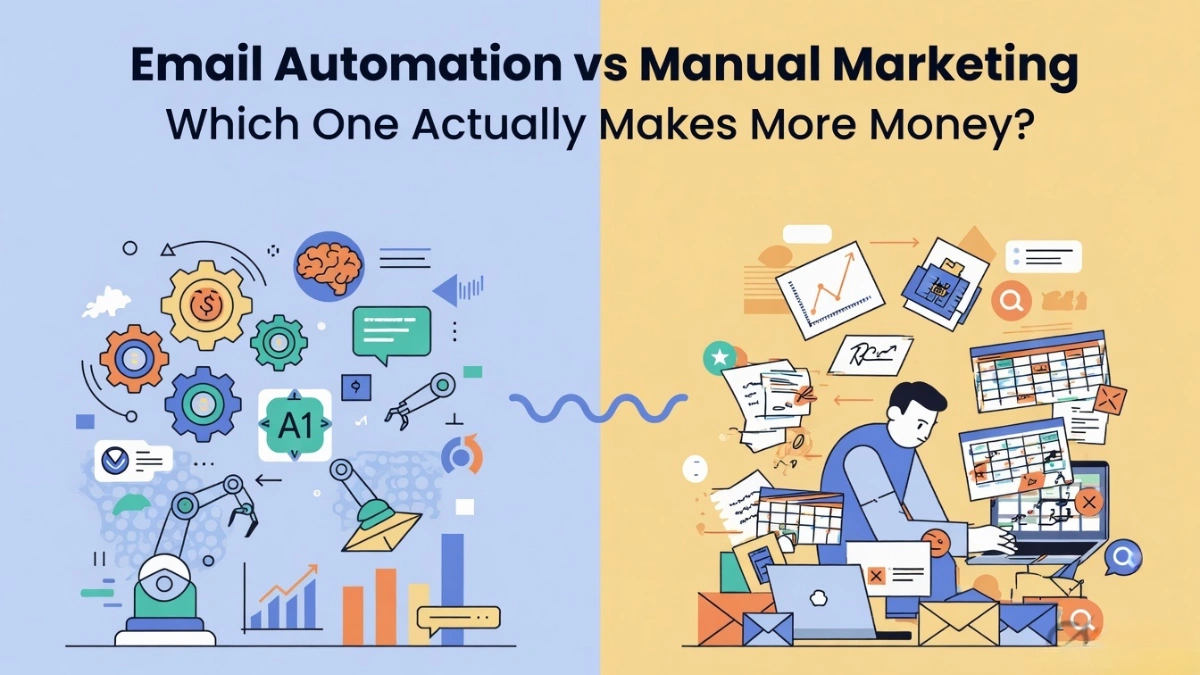
In 2026, email marketing remains one of the highest-performing channels, but the way you execute it determines whether you generate revenue or lose opportunities, and many businesses are still stuck in manual processes that consume time, create inconsistency, and limit scalability, while others are leveraging automation to deliver personalized, timely, and data-driven campaigns that convert at a much higher rate, which is why understanding the difference between email automation and manual marketing is critical if you want to maximize results and stay competitive.
What Is Manual Email Marketing
Manual email marketing involves creating, scheduling, and sending emails individually or in batches without automated workflows, which means marketers must handle segmentation, follow-ups, and campaign timing manually, and while this approach gives full control over messaging and customization, it becomes inefficient as the number of leads grows, leading to delays, missed opportunities, and inconsistent communication that can negatively impact customer engagement.
What Is Email Automation
Email automation uses software to send emails automatically based on triggers, behavior, or predefined workflows, allowing businesses to deliver the right message at the right time without manual effort, and tools like Mailchimp, ActiveCampaign, and HubSpot enable businesses to automate welcome emails, follow-ups, abandoned cart reminders, and lead nurturing campaigns, making it easier to engage customers and increase conversions.
Key Differences Between Automation and Manual Marketing
The primary difference lies in efficiency and scalability, as manual marketing requires constant human effort and is limited by time and resources, while automation allows businesses to scale campaigns effortlessly, maintain consistency, and respond to customer behavior in real time, and this difference becomes more significant as businesses grow and need to manage larger audiences.
Email Automation vs Manual Marketing Comparison Table
| Feature | Email Automation | Manual Marketing |
|---|---|---|
| Effort Required | Low | High |
| Scalability | High | Limited |
| Personalization | Advanced | Basic |
| Timing | Real-time triggers | Scheduled manually |
| Consistency | High | Variable |
| Cost Efficiency | Better long-term | Higher effort cost |
Benefits of Email Automation
Email automation provides several advantages that directly impact marketing performance, including the ability to send personalized messages based on user behavior, automate repetitive tasks, improve engagement through timely communication, increase conversion rates, and scale campaigns without increasing workload, making it one of the most powerful tools for modern marketing strategies.
Benefits of Manual Email Marketing
Manual marketing still has its place, especially for small businesses or highly personalized campaigns, as it allows full control over content and timing, making it suitable for one-to-one communication, special campaigns, or situations where a human touch is essential, but its limitations become evident as the business grows.
Challenges of Email Automation
While automation is powerful, it requires proper setup, strategy, and monitoring to be effective, as poorly designed workflows can lead to irrelevant or repetitive emails, and there is also a learning curve involved in using advanced tools, which means businesses need to invest time in planning and optimization.
Challenges of Manual Marketing
Manual marketing is time-consuming and difficult to scale, as it requires constant effort and can lead to inconsistencies and errors, making it less efficient for businesses with large audiences or complex campaigns.
Which Works Better in 2026
In 2026, email automation clearly outperforms manual marketing for most businesses due to its efficiency, scalability, and ability to deliver personalized experiences at scale, while manual marketing is better suited for specific use cases where human interaction is required, meaning the best approach often involves combining both methods strategically.
How to Choose the Right Approach
The choice between automation and manual marketing depends on your business size, goals, and resources, as startups and small businesses can start with simple automation tools, while larger organizations should invest in advanced platforms like ActiveCampaign or HubSpot to maximize efficiency and results, and it is important to balance automation with personalization to maintain a human connection.
Conclusion
Email automation and manual marketing both have their advantages, but in 2026, automation is the clear winner for businesses that want to scale, improve efficiency, and increase conversions, while manual marketing still plays a role in building personal connections, and the key to success is finding the right balance between the two to create effective and engaging campaigns.
Disclaimer: This article is for informational purposes only. Marketing strategies should be tailored to specific business needs.