
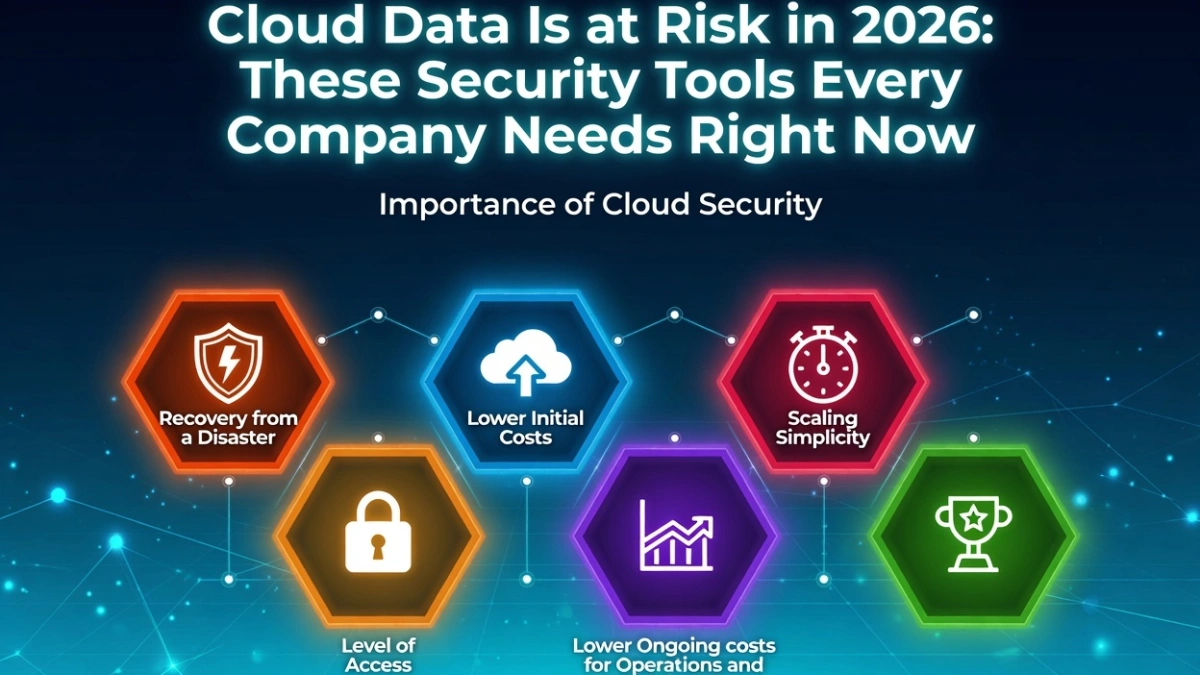
In 2026, businesses are rapidly moving their operations to the cloud, from storing sensitive customer data to running critical applications, but this shift has also made organizations more vulnerable to cyber threats such as data breaches, ransomware, and unauthorized access, and many companies mistakenly believe that cloud providers handle all security, when in reality, protecting data in the cloud is a shared responsibility, which means businesses must implement the right cloud security tools to safeguard their systems, ensure compliance, and maintain customer trust in an increasingly digital environment.
Why Cloud Security Is Critical for Modern Businesses
Cloud computing offers flexibility, scalability, and cost savings, but it also introduces new risks, as data is stored on remote servers and accessed over the internet, making it a target for cybercriminals, and without proper security measures, businesses can face serious consequences such as financial loss, legal penalties, and reputational damage, while cloud security tools provide protection by monitoring threats, controlling access, and ensuring data integrity, making them essential for companies of all sizes.
Key Features to Look for in Cloud Security Tools
Choosing the right cloud security solution requires focusing on features that provide comprehensive protection, such as identity and access management, data encryption, real-time threat detection, compliance monitoring, and automated security controls, because these capabilities help businesses prevent unauthorized access, detect threats early, and maintain a secure cloud environment.
Top Cloud Security Tools Every Company Needs in 2026
Microsoft Defender for Cloud
Microsoft Defender for Cloud, developed by Microsoft, provides comprehensive protection for cloud environments, including threat detection, compliance management, and security posture monitoring, making it ideal for businesses using Microsoft Azure and hybrid environments.
AWS Shield
AWS Shield, offered by Amazon Web Services, protects applications from distributed denial-of-service (DDoS) attacks, ensuring that businesses can maintain availability and performance even under attack.
Google Cloud Security Command Center
Google Cloud Security Command Center, developed by Google, provides visibility into security risks, threat detection, and compliance management, helping businesses secure their cloud infrastructure effectively.
CrowdStrike Falcon
CrowdStrike Falcon is a cloud-native security platform that offers advanced threat intelligence, endpoint protection, and real-time monitoring, making it a strong choice for businesses looking for modern security solutions.
Zscaler
Zscaler focuses on secure access and network protection, enabling businesses to provide safe and controlled access to cloud applications without relying on traditional VPNs.
Palo Alto Networks Prisma Cloud
Prisma Cloud, by Palo Alto Networks, offers comprehensive cloud security, including workload protection, compliance monitoring, and threat detection, making it suitable for enterprises.
Cloud Security Tools Comparison Table
| Tool | Best For | Key Strength | Deployment |
|---|---|---|---|
| Microsoft Defender for Cloud | Azure users | Integrated security | Cloud |
| AWS Shield | AWS environments | DDoS protection | Cloud |
| Google Security Command Center | GCP users | Risk visibility | Cloud |
| CrowdStrike Falcon | Enterprises | Real-time intelligence | Cloud |
| Zscaler | Remote access security | Zero trust model | Cloud |
| Prisma Cloud | Large enterprises | Full cloud security | Cloud |
Benefits of Cloud Security Tools
Cloud security tools provide several advantages that directly protect businesses, including enhanced data protection through encryption and access control, real-time threat detection that prevents attacks before they escalate, improved compliance with industry regulations, centralized security management across multiple environments, and scalability that allows businesses to secure growing cloud infrastructure effectively.
Challenges Companies Should Consider
While cloud security tools are essential, businesses may face challenges such as choosing the right solution, managing multiple tools, and ensuring proper configuration, as well as keeping up with evolving threats and compliance requirements, which makes it important to adopt a well-planned security strategy.
How to Choose the Right Cloud Security Tools
Selecting the right tools depends on your cloud provider, business size, and security needs, as companies using AWS should consider AWS Shield, while those on Azure may prefer Microsoft Defender for Cloud, and businesses with multi-cloud environments can benefit from solutions like Prisma Cloud or CrowdStrike, and evaluating features, scalability, and integration capabilities is crucial before making a decision.
Key Practices for Cloud Security
To maximize protection, businesses should follow essential practices:
Implement strong access controls, use encryption for sensitive data, monitor systems continuously, update security policies regularly, and train employees on cloud security awareness.
Why Cloud Security Matters More Than Ever in 2026
With increasing reliance on cloud computing, businesses are more exposed to cyber threats than ever before, and investing in the right security tools ensures that they can protect their data, maintain customer trust, and avoid costly disruptions, making cloud security a top priority for modern organizations.
Conclusion
Cloud security tools are essential for businesses that want to operate safely in 2026, and with solutions like Microsoft Defender for Cloud, AWS Shield, Google Cloud Security Command Center, CrowdStrike Falcon, Zscaler, and Prisma Cloud, companies have access to powerful technologies that can protect their systems and data from evolving threats, making it critical to choose the right tools and implement a strong security strategy.
Disclaimer: This article is for informational purposes only. Security solutions should be selected based on specific business requirements and expert advice.