
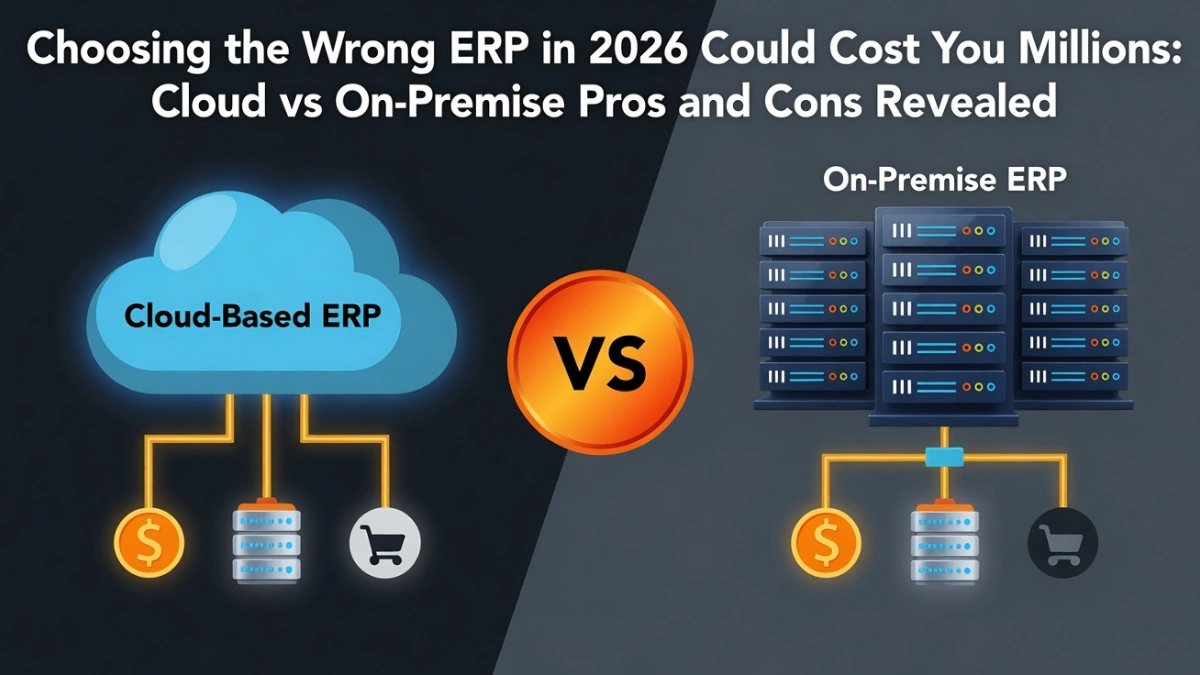
In 2026, businesses are rapidly digitizing operations, but one critical decision still creates confusion and costly mistakes: choosing between Cloud ERP and On-Premise ERP, and while both systems offer powerful capabilities, selecting the wrong one can lead to higher costs, limited scalability, and operational inefficiencies that slow down growth, which is why understanding the pros and cons of each model is essential before making an investment, especially when platforms like Oracle ERP Cloud, Microsoft Dynamics 365, and SAP ERP offer both deployment options tailored to different business needs.
What Is Cloud ERP
Cloud ERP is a web-based system hosted on remote servers, allowing businesses to access their ERP software through the internet without installing it locally, which means companies can manage operations from anywhere, benefit from automatic updates, and avoid investing in expensive infrastructure, making it a preferred choice for startups and growing businesses that need flexibility and scalability without heavy upfront costs.
What Is On-Premise ERP
On-Premise ERP is installed on a company’s own servers and managed internally, giving businesses full control over their data, security, and system configuration, which makes it suitable for organizations with strict compliance requirements or complex workflows, but it also requires significant investment in hardware, IT teams, and ongoing maintenance, making it less accessible for smaller businesses.
Key Differences Between Cloud and On-Premise ERP
The primary difference lies in deployment and management, as cloud ERP is hosted externally and accessed online, while on-premise ERP is managed internally, and this affects everything from cost and scalability to maintenance and accessibility, with cloud systems offering convenience and flexibility, and on-premise systems providing control and customization, which is why businesses must evaluate their priorities carefully before choosing.
Cloud ERP vs On-Premise ERP Comparison Table
| Feature | Cloud ERP | On-Premise ERP |
|---|---|---|
| Deployment | Internet-based | Local servers |
| Upfront Cost | Low | High |
| Maintenance | Managed by provider | Managed internally |
| Scalability | Easy | Limited |
| Accessibility | Anywhere | Restricted |
| Security Control | Provider-managed | Full internal control |
Pros of Cloud ERP
Cloud ERP offers several advantages that make it the preferred choice for modern businesses, including lower upfront costs, as companies do not need to invest in hardware or infrastructure, automatic updates and maintenance handled by the provider, which reduces IT workload, easy scalability that allows businesses to add users or features without major changes, and remote accessibility that enables teams to work from anywhere, making it ideal for organizations with distributed teams or rapid growth plans.
Cons of Cloud ERP
Despite its benefits, cloud ERP also has some limitations, such as dependency on internet connectivity, which can affect access in case of network issues, ongoing subscription costs that may increase over time as the business grows, and potential concerns about data security and privacy, as data is stored on external servers, although most providers offer advanced security measures.
Pros of On-Premise ERP
On-premise ERP provides complete control over data and systems, allowing businesses to manage security and compliance internally, which is crucial for industries with strict regulations, it also enables deep customization to match unique workflows, and since it does not rely on internet connectivity, it can offer consistent performance in controlled environments, making it suitable for large enterprises with dedicated IT infrastructure.
Cons of On-Premise ERP
On-premise ERP comes with significant challenges, including high initial costs for hardware, licenses, and setup, ongoing maintenance and upgrade responsibilities that require skilled IT teams, limited scalability that makes expansion more complex and expensive, and longer implementation timelines compared to cloud solutions, which can delay business benefits.
Which ERP Model Is Better in 2026
In 2026, cloud ERP is becoming the dominant choice for most businesses due to its flexibility, cost efficiency, and ease of use, especially for startups and small to mid-sized companies that need to scale quickly without heavy investment, while on-premise ERP remains relevant for large enterprises or industries that require strict data control and customization, meaning the best choice ultimately depends on your business size, technical capabilities, and long-term goals.
How to Choose the Right ERP Deployment
Selecting the right ERP model requires careful evaluation of your business needs, budget, and infrastructure, as companies with limited IT resources and a need for flexibility should consider cloud ERP, while those with strong IT teams and strict compliance requirements may benefit from on-premise solutions, and it is also important to consider scalability, integration, and total cost of ownership before making a decision.
Conclusion
Cloud ERP and On-Premise ERP both offer unique advantages and challenges, but in 2026, the trend clearly favors cloud-based solutions due to their scalability and cost efficiency, while on-premise systems still provide unmatched control and customization for specific use cases, so choosing the right ERP model is not about which is better overall, but which aligns best with your business needs and future growth plans.
Disclaimer: This article is for informational purposes only. ERP selection should be based on business requirements and expert consultation.